Waste oil is one of those things most businesses don’t think about until they have to. It sits quietly in the background — in a drum behind a workshop, a container near a commercial kitchen, or a storage area on an industrial site — waiting to be dealt with.
But waste oil isn’t just another operational by-product. How a business handles it says a lot about how it operates overall. From legal compliance and environmental responsibility to basic site safety, waste oil management is one of those small details that can quietly cause big problems when ignored.
This guide is designed to give businesses a clearer, more practical understanding of waste oil collection in the UK — not just what it is, but why getting it right matters.
What is considered waste oil in a business environment?
In commercial settings, waste oil can come from a wide range of activities, which is often where confusion starts. Many businesses don’t realise that once oil has been used and can no longer serve its original purpose, it immediately becomes controlled waste.
For some businesses, that’s obvious. Garages and workshops deal with used engine oil every day. For others, it’s less clear. Commercial kitchens generate cooking oil that can’t be reused indefinitely. Property maintenance teams may encounter waste oil from heating systems, generators, or plant equipment. Manufacturing and industrial sites often produce lubricating oils or cutting fluids as part of normal operations.
While the type of oil may vary, the responsibility does not. Once oil becomes waste, businesses are legally responsible for how it is stored, collected, and ultimately treated or recycled.
Why waste oil collection is more than a compliance exercise
Many businesses see waste oil collection purely through a compliance lens — something that needs to be done to avoid fines or pass inspections. While compliance is important, it’s only part of the picture.
Improperly stored or unmanaged waste oil can quickly become a safety risk. Leaks and spills can contaminate floors, drains, and surrounding land. Oil residue creates slip hazards, particularly in busy working environments. In worst-case scenarios, poorly stored oil can present fire risks or lead to costly clean-up operations.
Beyond safety, there’s also the issue of control. Businesses that leave waste oil to “build up” often find themselves reacting under pressure — scrambling to arrange a collection when containers are full or dealing with problems that could have been avoided with a more structured approach.
A proper waste oil collection service removes that uncertainty. It turns waste oil from a recurring headache into a managed, predictable process.
Which businesses typically require waste oil collection?
Waste oil collection is not limited to heavy industry or vehicle-related trades. In reality, it applies to a broad range of commercial operations.
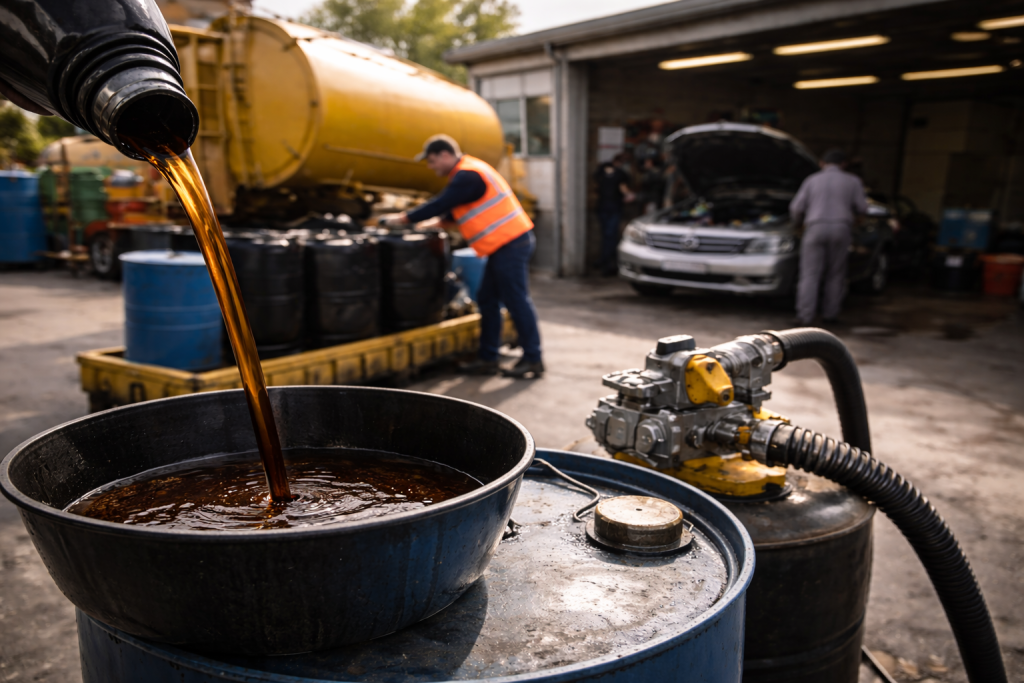
Garages, mechanics, and workshops are the most obvious examples, producing used engine oil and vehicle fluids as part of daily work. Restaurants and commercial kitchens generate large volumes of cooking oil that must be disposed of safely to prevent drainage issues and environmental harm.
Manufacturing and industrial sites often deal with lubricants, hydraulic oils, and machine fluids that require specialist handling. Property maintenance companies and facilities teams encounter waste oil across multiple sites, from generators to heating systems. Construction and plant hire businesses also generate waste oil during machinery servicing and site maintenance.
In all cases, the principle is the same: if oil is produced as part of your business activity, it needs a compliant and reliable disposal route.
How commercial waste oil collection works in practice
Despite common assumptions, arranging waste oil collection for a business is usually straightforward. The process is designed to fit around operations rather than disrupt them.
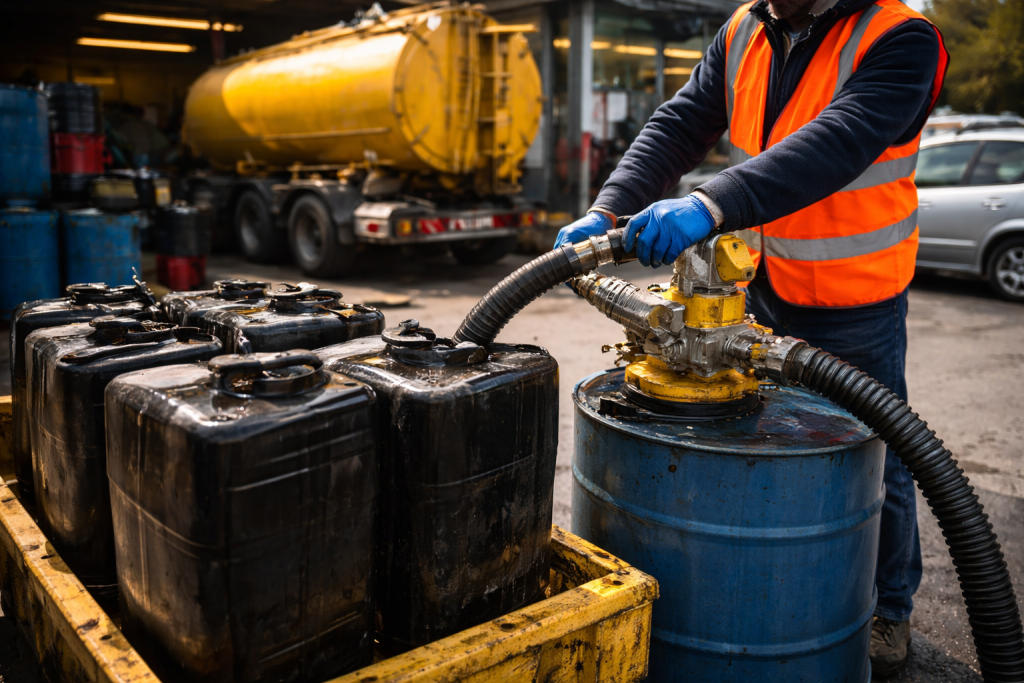
Waste oil is stored securely on site, typically in a suitable container or drum that prevents leaks and contamination. Collections are then arranged either on a scheduled basis or as needed, depending on the volume produced.
A licensed waste carrier collects the oil and provides the necessary documentation, ensuring the business meets its duty of care obligations. From there, the oil is transported for treatment or recycling, where it can often be reprocessed and reused rather than disposed of as waste.
The key benefit for businesses is continuity. Once a collection routine is established, waste oil stops being something that needs constant attention.
How often should businesses arrange waste oil collection?
There is no one-size-fits-all answer, and that’s important to recognise. The right collection frequency depends on how much waste oil your business produces and how much storage capacity you have on site.
High-volume producers, such as busy garages or commercial kitchens, often benefit from regular scheduled collections. This prevents overflows and keeps storage areas manageable. Businesses that produce smaller quantities may opt for collections when containers reach capacity.
What matters most is avoiding reactive decisions. Regular, planned collections reduce risk and make compliance easier to manage.
Common mistakes businesses make with waste oil
Most waste oil issues don’t come from deliberate wrongdoing. They come from assumptions.
Some businesses underestimate how tightly waste oil is regulated. Others assume small amounts don’t matter, or that mixing oil with other waste streams is acceptable. Using unlicensed carriers, storing oil in unsuitable containers, or delaying collections until a problem arises are all common mistakes.
Individually, these may seem minor. Collectively, they can lead to enforcement action, environmental damage, and unnecessary costs.
The environmental impact of waste oil disposal
Waste oil is highly polluting when disposed of incorrectly. Even small quantities can contaminate large volumes of water or soil, causing long-term environmental damage.
When handled properly, however, waste oil becomes a valuable resource. It can be refined, reused, or converted into alternative fuels, reducing the need for virgin materials and supporting more sustainable waste management practices.
For businesses, correct waste oil disposal isn’t just about compliance — it’s about playing a role in reducing environmental harm.
Why professional waste oil collection makes sense for businesses
For most businesses, outsourcing waste oil collection is simply the most practical option. It removes uncertainty, reduces risk, and ensures compliance without adding administrative burden.
More importantly, it allows teams to focus on what they do best, rather than worrying about waste regulations and storage issues.
Final thoughts: waste oil management reflects how a business operates
Waste oil may not be the most visible part of your operation, but it’s one of the most telling. Businesses that manage it properly tend to run cleaner, safer, and more organised sites overall.
Getting waste oil collection right isn’t about overthinking it. It’s about putting the right system in place and letting it run in the background.
Waste oil collection for businesses across the UK
We provide commercial waste oil collection services across the UK, supporting garages, restaurants, property maintenance teams, and industrial sites with compliant, reliable disposal solutions.
If your business produces waste oil and you want a simpler, more dependable way to manage it, our team can help you put the right collection process in place.
Call us direct on 0330 353 0327 to discuss your requirements.
Read more information on our waste services here.


