Four men have been arrested as part of an ongoing investigation into large-scale illegal waste dumping at the Bolton House Road site in Bickershaw, Wigan.
The site, which has reportedly accumulated around 25,000 tonnes of illegally dumped waste, has caused serious problems for the surrounding community. It is situated close to homes, a playing field and a primary school, with local residents reporting foul smells, flies and rat infestations.
A fire at the site during the summer of 2025 also burned for around a week and forced nearby schools to close.
The arrests represent an important development in a case that demonstrates the enormous environmental and human cost of illegal waste disposal.
Four men arrested as part of Environment Agency investigation
The four men were arrested on 4 August 2026 following an operation involving the Environment Agency and police forces from Greater Manchester, Lancashire and West Yorkshire.
According to the official Environment Agency announcement, the arrested men were:
- A 41-year-old man from Wigan
- A 35-year-old man from Wigan
- A 24-year-old man from Leeds
- A 59-year-old man from Liverpool
They were arrested on suspicion of environmental, fraud and money-laundering offences.
The arrests form part of an ongoing criminal investigation. At the time of writing, the men have not been convicted of any offence, and the allegations against them remain under investigation.
The 24-year-old man was also arrested in connection with alleged illegal waste dumping at Cave’s Inn Pits, a Site of Special Scientific Interest near Shawell in Leicestershire.
The Environment Agency reports that approximately 30,000 tonnes of shredded waste were dumped at that location in layers and then covered with soil. Air and water quality around the site are being monitored while the investigation continues.
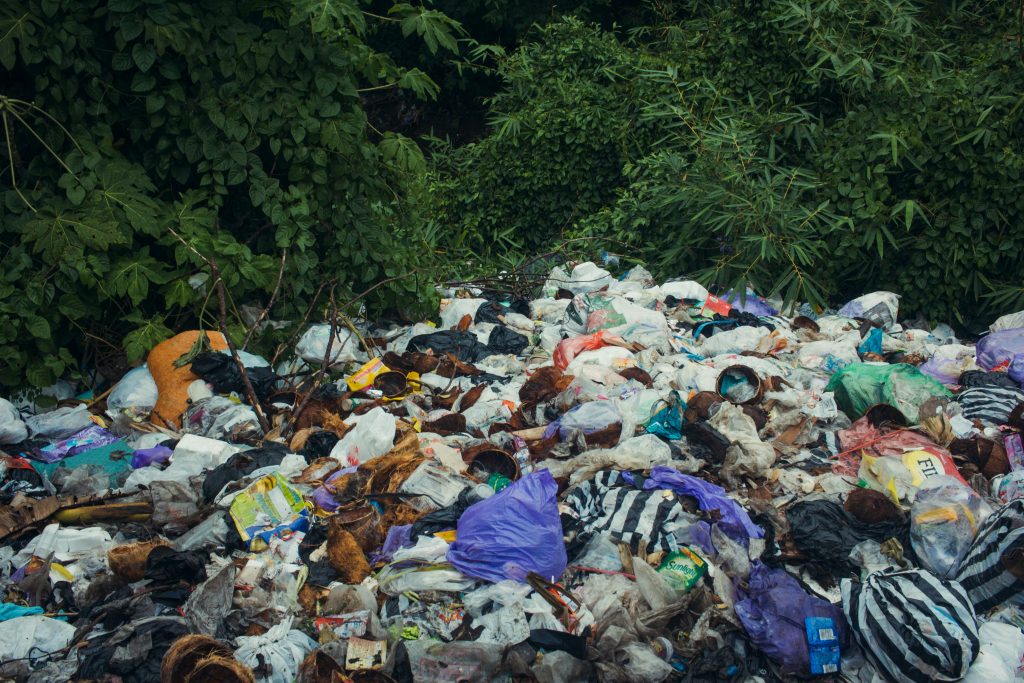
How the Wigan waste dump affected local residents
The Bolton House Road site is not simply an untidy patch of land. Reports suggest it covers around two acres and contains approximately 25,000 tonnes of waste.
Residents living near the site have previously described problems involving rats, flies, seagulls and persistent unpleasant smells. The waste is located close to houses, a playing field and a primary school, making its impact particularly concerning for families in the area.
The scale of the problem became even clearer when a major fire broke out at the site in July 2025. It reportedly burned for around a week, with the smoke and disruption resulting in nearby schools being closed.
These consequences show why large-scale illegal waste dumping is much more serious than littering. It can create fire hazards, attract vermin, damage land and waterways and make daily life miserable for surrounding communities.
The government will fund the site clean-up
The government has confirmed that it will directly fund the clean-up of the Bolton House Road waste site.
Wigan Council is working to appoint a specialist contractor to carry out the operation. Concrete blocks have also been placed at the site entrance to prevent more vehicles from entering and depositing additional waste.
Cleaning a site containing tens of thousands of tonnes of mixed waste is likely to be an extensive operation. The waste must be assessed, safely removed, transported and taken to appropriately authorised facilities.
The cost and complexity involved demonstrate how communities and taxpayers can ultimately be left dealing with the consequences of illegal waste activity.
Illegal dumping is not always carried out by an individual
When people hear the term fly-tipping, they may picture a few bin bags or an unwanted sofa left beside a country road.
The Wigan case demonstrates the other end of the problem.
Serious waste crime can involve businesses or organised groups collecting large quantities of rubbish, charging customers for legitimate disposal and then avoiding the cost of processing it correctly.
A dishonest operator can sometimes offer a price that seems considerably cheaper than other waste removal companies because it has no intention of paying the proper disposal or recycling costs.
Once the waste has been collected, it may be dumped on private land, in fields, at abandoned industrial sites or at facilities that do not have the necessary environmental permits.
Could your rubbish end up at an illegal waste site?
Most customers booking a skip or rubbish collection expect their waste to be handled responsibly. However, customers still need to take reasonable steps to check who is collecting it.
Householders and businesses have a duty of care relating to their waste. This does not mean that customers must personally follow the vehicle to a recycling facility, but they should check that the person or company collecting the waste is authorised to do so.
The Environment Agency recommends three important checks:
- Confirm that the business has a valid waste carrier registration.
- Ask where the rubbish will be taken.
- Keep an invoice, receipt or other record of the collection.
You can search for a company using the Environment Agency’s Register of Waste Carriers, Brokers and Dealers.
The register allows customers to search using a company name, registration number or postcode.
Warning signs when choosing a waste collector
An inexpensive waste collection is not automatically illegal. However, caution is sensible when a price seems far below every other quotation.
Possible warning signs include:
- The collector cannot provide a waste carrier registration number.
- The business has no verifiable name, address or contact details.
- The operator will only accept cash.
- No invoice, receipt or booking confirmation is provided.
- The collector cannot explain where the waste will be taken.
- The company is vague about which materials it can legally accept.
- An unmarked vehicle arrives instead of the company shown in the advertisement.
The Environment Agency also recommends being careful when booking waste collections through social media adverts, online marketplaces or unverified mobile applications. A professional-looking advertisement does not prove that the person behind it is registered or that the waste will reach a legal disposal site.
What cannot be placed in a standard skip?
Responsible waste disposal also means using the correct service for the materials you need to remove.
Standard skips are suitable for many forms of household, garden and construction waste. However, hazardous and restricted materials often require separate handling.
Items that generally cannot be placed in a standard skip include:
- Asbestos
- Batteries
- Chemicals and solvents
- Gas bottles and cylinders
- Paint and liquid waste
- Fridges and freezers
- Fluorescent tubes
- Tyres
- Clinical waste
- Certain electrical items
Before booking, read our FAQ explaining what can and cannot be put in a waste skip.
You can also compare the available skip hire sizes to find an appropriate option for your project. Choosing the correct skip and declaring the waste type accurately helps ensure that it can be safely transported and processed.
Why responsible waste disposal matters
Illegal waste dumping affects far more than the appearance of an area.
Poorly managed waste can contaminate land, increase fire risks, attract vermin and release pollutants into the surrounding environment. It can also place legitimate waste businesses at a disadvantage because responsible companies must pay the proper costs associated with transport, recycling, treatment and disposal.
Waste crime also takes enforcement officers, police and local-authority resources away from other important work.
The Environment Agency reported that during 2024/25 it worked with partner organisations to stop 743 illegal waste sites operating without permits. It also led 37 operations resulting in 40 arrests and carried out 21 money-laundering investigations.
Choosing responsible skip hire and rubbish removal
The investigation in Wigan is an extreme example, but it provides an important reminder for anyone arranging waste removal.
Your responsibility does not end the moment unwanted rubbish leaves your driveway, garden or business premises.
By choosing an established waste company, checking its registration and keeping your booking records, you reduce the risk of your waste becoming part of an illegal dump.
WasteOnline helps households and businesses arrange skip hire and rubbish removal through trusted waste suppliers across the UK.
Enter your postcode to view the available services and prices in your area, choose the correct waste type and book your collection online.
Frequently asked questions
What happened at the illegal waste dump in Wigan?
Four men were arrested on 4 August 2026 as part of an Environment Agency investigation into alleged large-scale illegal waste dumping at Bolton House Road in Bickershaw, Wigan. The site reportedly contains around 25,000 tonnes of waste.
Have the four men been charged?
The official announcement confirms that the men were arrested on suspicion of environmental, fraud and money-laundering offences. The investigation is ongoing, and an arrest does not mean that somebody has been convicted.
How can I check whether a waste carrier is registered?
Search the Environment Agency’s online Register of Waste Carriers, Brokers and Dealers using the company’s name, registration number or postcode.
What information should I keep after a waste collection?
Keep your booking confirmation, invoice or receipt, the company’s name and contact information, and its waste carrier registration details.
Is hiring a skip a responsible way to remove waste?
Yes, provided the skip is supplied and collected through an authorised waste business and you declare the waste accurately. You should also follow the provider’s rules concerning prohibited or hazardous materials.


